“Small doses stimulate, moderate doses inhibit, large doses kill.” The Arndt-Schulz rule
Both plants and humans respond well to small amounts of stress in what is called the hormetic response. In toxicology, the two coventional models used to be, a. no effect for small doses, with harm kicking in past a certain level (threshold response), or b. immediate harm from even small doses, growing as the dose increases (linear response).


The hormetic (or biphasic) response, however, is represented by a J-curve where small amounts of a toxic stress stimulate and benefit an organism, only becoming harmful when a certain level is reached.

“All things are poison and nothing is without poison, only the dose makes something not a poison". Paracelsus, 1493-1541
Exercise is a good example. It imposes stresses on muscle tissue and the cardiovascular system, but in the right amount has numerous benefits. However, too much exercise, without time for recovery, can lead to injury or what is known as overtraining syndrome, with physical, mental and emotional symptoms that can take from a few weeks to many months to recover from. The same principle applies to heat exposure, cold exposure, sun exposure and even, according to some evidence, exposure to toxins such as radiation and mercury. And as an ex-acupuncturist, I’d point out that piercing the body with thin steel instruments can work wonders, while larger ones, such as a knife or dagger, are definitely not a good thing.
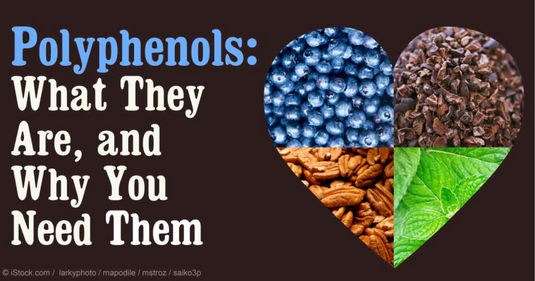
Recently I became interested in the fact that plants produce more defensive polyphenols in response to stressors such as wind, heat, drought and pests. In extreme heat and ultraviolet light, for example, they accumulate flavonols and other substances in their leaves and fruit skins which act as a form of sunscreen (of course, as we are seeing more and more often, when heat exceeds what a plant can tolerate, it dies).
The best known of the polyphenols are flavonoids. They are found plentifully in tea, red wine and cocoa, with smaller amounts in a range of other foods – herbs, spices, nuts and whole grains. Strongly coloured foods tend to contain more, hence the advice to ‘eat the rainbow,’ as do the skins, peels and outer layers of plants. Wild fruits contain more than cultivated fruits, and organically-grown foods also contain higher levels, maybe because of the greater stress from pests (in the absence of pesticides), and lower (= more natural) levels of nitrogen in the soil. So for cultivation of fruits and vegetables, it makes sense to grow them organically, and if food is produced in polytunnels or in high-tech vertical farms, it may make sense to introduce artifical challenges like wind or occasional under-watering.
There is strong evidence that these plant flavonoids benefit human health. They can improve blood vessel function and reduce blood pressure and the risk of heart disease and stroke. They may also lower the risk of type 2 diabetes, improve memory and attention, and benefit gut and bone health.
It was long thought that these benefits were due to the antioxidant effects of flavonoids, but despite considerable efforts to prove this, the evidence just doesn’t back it up. Indeed high level supplementation by green tea extract, for example, not only has shown no benefit but instead has been found to damage the liver.
A newer theory is that the flavonoids produced by plants as defence compounds, act as poisons when we consume them. They then trigger mild cellular stress with the result that our cells increase their own protective systems. This is another example of the hormetic response.
The great 7th century Chinese doctor Sun Simiao (known as the ‘god of medicine’), observed that severe psychological and emotional stress in the first four or so months of pregnancy can harm both the mother and the foetus. Research has backed this up and demonstrated that stress in the womb can lead to long-term emotional or cognitive problems in the child. It was something of a surprise, therefore, when a further study revealed that when pregnant women suffered ‘moderate [not severe] anxiety’, their chuldren had better, not worse, mental and motor scores.
Hungarian-Canadian endocrinologist Hans Selye who was the first to closely examine the effect of stress on human health, coined the term ‘eustress’ to describe positive physical or psychological stress, and compared it to harmful ‘distress’. We cannot get through life with facing challenges. If they are too extreme they may damage, or even destroy us, but in the right amount they can stimulate creativity and build resilience, especially if we reframe them as invitations and not threats.
The evidence tells us that moderate stress may be better for us than a placid, eternally calm life. Or as the Scottish Essayist Thomas Carlyle is reputed to have said, “No pressure, no diamonds.”